


The decision by Zambia and Zimbabwe to develop a new US$2.2 billion railway line linking Kafue in Zambia to Lion’s Den in Zimbabwe marks one of the most significant infrastructure undertakings in Southern Africa in recent years.
More than just a transport project, the 311-kilometre rail corridor has the potential to transform trade flows, stimulate industries and deepen economic cooperation between the two neighbouring countries.
For decades, both Zambia and Zimbabwe have relied heavily on long and costly road transport routes to move exports and imports.
This has increased fuel consumption, damaged roads and raised the final cost of doing business. The new railway promises to dramatically change that equation by reducing freight distances to the Port of Beira in Mozambique by 800 kilometres, South African ports by 1,000 kilometres and Dar es Salaam by 500 kilometres.
For Zambia, a major copper producer, the railway is expected to lower export logistics costs for mining firms transporting copper, cobalt and other minerals to global markets.
Reduced transport costs mean mining companies can become more competitive, attract fresh investment and potentially expand production.
With Zambia targeting higher copper output in the coming years, efficient rail systems are no longer optional—they are essential.
The project will also benefit Zambia’s agricultural sector. Farmers producing maize, sugar, tobacco and other commodities will gain cheaper access to export routes.
Agro-processing companies located in Lusaka, Southern Province and the Copperbelt are likely to see improved profitability due to lower transport charges.
Zimbabwe stands to gain significantly as well. As the railway passes through its territory, the country is poised to earn transit revenues, create jobs and stimulate economic activity in towns along the route.
Construction of stations, marshalling yards and support services will generate employment opportunities for engineers, technicians, contractors and local suppliers.
In addition, Zimbabwe’s steel, cement, quarrying and manufacturing sectors are likely to receive a boost during the construction phase, as demand rises for materials and industrial inputs.
Once operational, the railway can help revive Zimbabwe’s ambition of becoming a logistics and transit hub linking inland countries to the Indian Ocean.
The broader regional impact should not be overlooked. Rail transport is cheaper, safer and more environmentally sustainable than heavy truck movement.
By shifting freight from roads to rail, both countries could reduce road congestion, accidents and maintenance costs on highways damaged by overloaded trucks.
The project also strengthens regional integration under the Southern African Development Community framework. It signals growing confidence in African-led infrastructure solutions designed to unlock trade and industrial growth.
Perhaps most importantly, the railway reflects a future-focused partnership between Zambia and Zimbabwe. Instead of being separated by borders, the two nations are choosing to be connected by opportunity.
If implemented efficiently and managed professionally, the Lion’s Den-Kafue railway could become more than steel tracks on the ground—it could become the economic lifeline that powers a new era of prosperity for both Zambia and Zimbabwe.
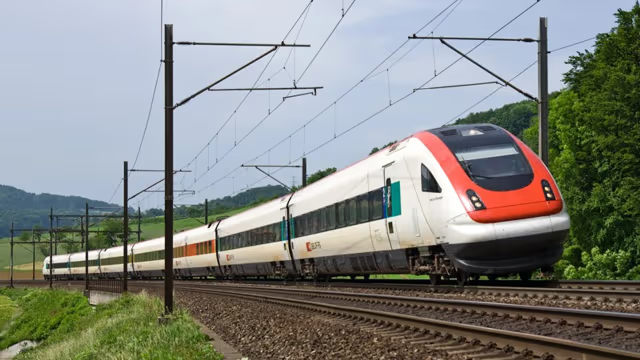
Picture: Railway line