


More than half of the asylum seekers and migrants whose claims are expected to be rejected under the UK government’s proposed tightening of human rights laws are likely to remain in the country, according to the Home Office’s own assessment.
Documents released on Tuesday reveal that the planned restrictions on Article 8 of the European Convention on Human Rights (ECHR), which protects the right to family and private life, are expected to result in an additional 11,700 asylum and visa claims being refused each year.
However, the same impact assessment estimates that 55 percent of those whose claims are rejected under the new Article 8 rules will continue living in the UK despite being denied permission to remain.
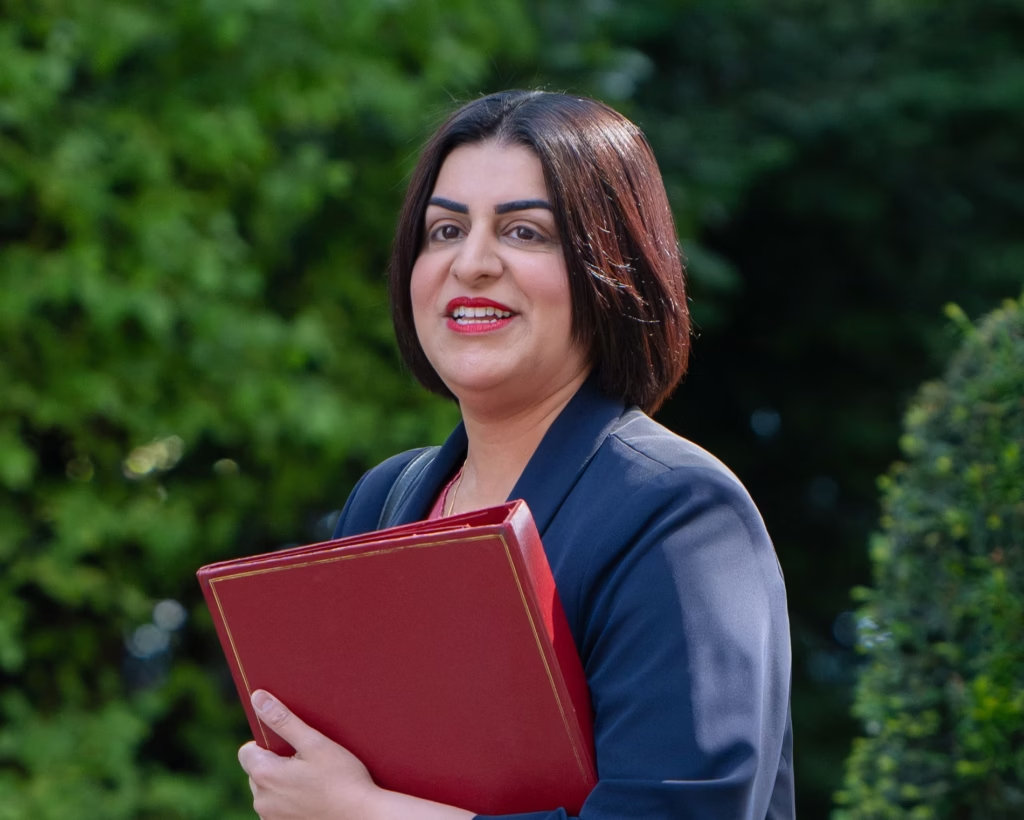
The findings were published as Justice Secretary Shabana Mahmood introduced the Immigration and Asylum Bill to Parliament.
The proposed legislation includes several sweeping reforms, including a £10,000 charge for asylum seekers before they can obtain settled status, the creation of a new appeals system without judges, and stricter rules governing modern slavery claims.
The measures have drawn criticism from refugee advocates, who argue that the reforms will create more bureaucracy without addressing the underlying weaknesses in the asylum system.
Imran Hussain, Director of External Affairs at the Refugee Council, warned that the legislation could create “chaos in the Home Office and for the next prime minister for years to come.”
He said the bill would establish “a whole new architecture of bureaucracy” by introducing a new appeals system while imposing what he described as an unfair additional tax on refugees. At the same time, he argued, it fails to tackle the poor quality of initial asylum decisions that are responsible for significant delays and rising costs.
Hussain said frontline workers continue to assist men, women and children fleeing conflict and persecution in countries such as Afghanistan and Sudan.
“Like generations of refugees before them, all they want is to settle and stand on their own two feet, finding work in our NHS, our care homes and on our high streets,” he said.
“If the government is serious about building a fair and functioning asylum system, it must start by breaking the cycle of quick fixes and bills that create long-term chaos.”
According to the Home Office’s impact assessment, the department expects approximately 11,700 additional refusals annually as a direct result of the tighter Article 8 rules. Internal analysis also concludes that 55 percent of those refused under the new provisions are expected to remain in the UK.
The Home Office has further estimated that about 34,000 asylum seekers were granted permission to remain in Britain last year on the basis of Article 8 rights. It also calculated that each migrant who successfully relied on ECHR protections carries an estimated lifetime net cost of £141,000 after tax.
Under the proposed legislation, Article 8 claims will be restricted to a narrower definition of the “core family unit,” covering only spouses, parents and children.
The bill also seeks to prevent people who establish families while living illegally in the UK from relying on relationships with spouses or children to avoid deportation.
In addition, ministers plan to tighten the Modern Slavery Act by introducing deadlines for lodging modern slavery claims after arrival in the UK and limiting individuals to a single claim.
The government says the reforms are intended to create a firm but fair asylum system while reducing the incentives that encourage illegal migration.
However, some Labour MPs are expected to oppose the legislation, particularly its most restrictive provisions.
The proposed reforms come shortly after the Home Office announced plans to reopen former military barracks to house thousands of asylum seekers following the closure of 20 additional asylum hotels across England.
A Home Office source said Article 8 is a human rights provision that allows individuals to seek permission to remain in the UK on the basis of family or private life. Those affected by the proposed changes include both asylum seekers and migrants seeking to stay because of family ties established in the UK.
Picture: Shabana Mahmood