


The Democratic Republic of the Congo (DRC) and Zambia have been recognised among the nations holding some of the world’s largest copper reserves, further strengthening Africa’s importance in the global mining industry at a time when demand for the metal is rapidly increasing.
Copper has become one of the most sought-after minerals in the modern economy because of its vital use in electric vehicles, renewable energy systems, power transmission networks and advanced technologies such as artificial intelligence infrastructure.
As the world shifts toward cleaner energy and greater electrification, countries rich in copper resources are gaining strategic importance.
According to a recent report by Visual Capitalist, the DRC now ranks among the top four countries globally in terms of copper reserves. This makes it Africa’s largest holder of the valuable mineral and a key player in future global supply.
The country has also been increasing its influence through major mining partnerships, including a recent agreement involving state-owned mining company Gécamines and Kamoto Copper Company, an operation linked to global commodities giant Glencore Plc.
Neighbouring Zambia is equally enhancing its position as one of the world’s major copper producers. The country has set an ambitious target of producing more than one million tonnes of copper annually by 2026.
Authorities have also outlined a long-term plan to raise production to three million tonnes by 2031 through fresh investment, mine expansion and policy reforms designed to attract international investors.
Together, Zambia and the DRC form the heart of the Central African Copperbelt, one of the richest copper-producing regions in the world. This mineral-rich belt has for decades supported economic activity, employment and export earnings in both countries, and is now becoming even more significant as global demand rises.
Worldwide, copper reserves remain concentrated in a few countries. Chile continues to lead with an estimated 180 million tonnes, nearly double the reserves of the second-largest holder. Overall, global copper reserves are estimated at about 980 million tonnes, with just five countries controlling more than half of known supply.
However, experts warn that many remaining copper deposits are becoming harder and more expensive to mine. This could tighten global supply in the coming years and increase the value of countries with proven reserves and expanding production capacity.
For Zambia and the DRC, this presents a major economic opportunity. With proper investment, infrastructure development and value addition, the two nations could benefit significantly from the next wave of industrial growth driven by clean energy and technology.
As the global race for critical minerals intensifies, Zambia and the DRC are increasingly positioned not only as Africa’s copper giants, but also as indispensable players in the future world economy.
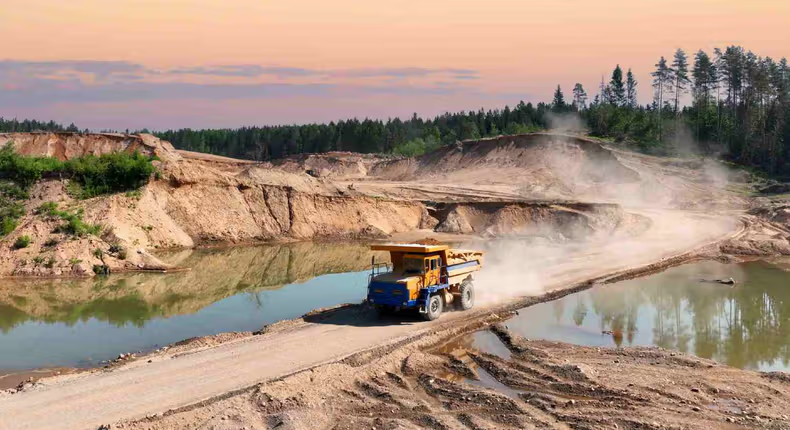
Picture: DRC Zambia copper countries